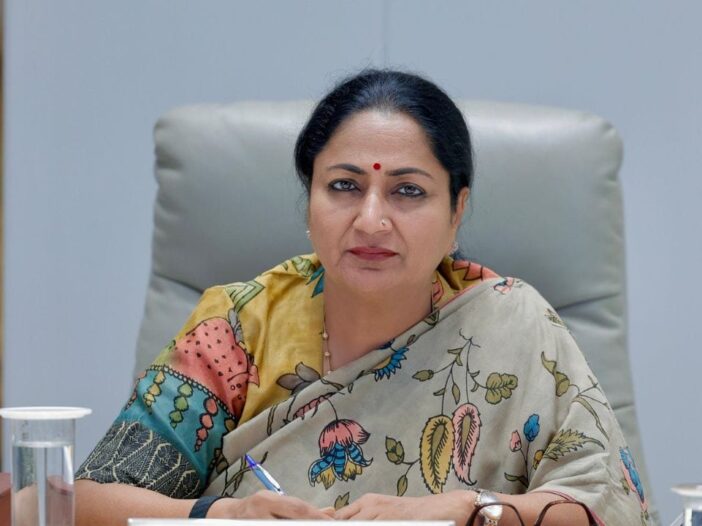
The Delhi government has notified ‘Delhi Electric Vehicle Policy 2026’ on Wednesday with the aim of improving the pollution levels in the National Capital Region. Its objective is to accelerate the adoption of electric vehicles, improve air quality and create a supporting system for electric transportation. Regarding this decision, Chief Minister Rekha Gupta says that the EV policy is not just a step taken towards a clean environment, but it is also a public welfare policy prepared keeping in mind the economic interests of the common citizens.
CM Rekha said, “The objective of Delhi EV Policy 2026 is to reduce the initial purchase cost of electric vehicles as well as their lifetime expenses so that more and more people can be motivated to adopt electric vehicles.
Option for homes and small and big businesses: CM Rekha
According to the Chief Minister, the biggest question in the mind of most people before buying an electric vehicle is whether it will actually save money. Delhi EV Policy 2026 gives a clear and positive answer to this question. This policy provides multiple benefits like purchase incentive, incentive on scrapping old polluting vehicles, lifetime road tax exemption, waiver of registration fees and lower operation and maintenance costs compared to petrol and diesel vehicles. This is why electric vehicles are now becoming the most sensible economic option for households, commercial drivers and small and big businesses.
Regarding the huge discounts available on electric vehicles, CM Rekha Gupta said that under this policy, eligible beneficiaries purchasing electric two-wheelers will get a purchase incentive of up to Rs 30,000, scrapping incentive of Rs 10,000, along with exemption in road tax and complete waiver of registration fee for the entire lifetime of the vehicle. All these benefits will result in initial savings of more than Rs 50,000 in addition to tax benefits.
How much profit will the buyer make?
He further said, “Eligible beneficiaries purchasing Electric Auto-Rickshaw (L-5) will be given purchase incentive of up to Rs 50,000 and scrapping incentive of Rs 25,000. They will also get the benefit of lifetime road tax exemption and registration fee waiver. This will enable initial savings of more than Rs 75,000, excluding tax benefits.”
According to the EV policy, those purchasing electric rural service vehicles will get a scrapping incentive of Rs 15,000 on scrapping the old vehicle. Eligible beneficiaries purchasing electric N-1 goods carrier will get purchase incentive of up to Rs 1 lakh, scrapping incentive of Rs 50,000, lifetime road tax exemption and registration fee waiver. This will enable initial savings of up to Rs 1.50 lakh in addition to tax benefits.
Chief Minister Rekha Gupta said that there is no provision for purchase incentive for private electric cars in the EV policy. But if an eligible person scraps a conventional fuel car and buys an electric car, he will get a scrapping incentive of up to Rs 1 lakh. Apart from this, you will also get the benefit of lifetime road tax exemption and registration fee waiver. Due to all these provisions, the buyer will receive significant financial benefits even when purchase incentives are not available.
He told that the biggest feature of this policy is that it is not just one type of subsidy, but many financial benefits have been combined together. Eligible buyers can significantly reduce the actual purchase cost of the vehicle by availing purchase incentives, scrapping incentives, lifetime road tax exemption and one-time registration fee waiver. Due to this, Delhi has become one of the most attractive states in the country to buy electric vehicles.
Chief Minister Rekha Gupta said that the government has decided to use public money only where the common citizens get the most benefit from it. Under this thinking, vehicle categories like two-wheelers, three-wheelers and N-1 goods carriers have been given priority, as they are mainly used by middle and lower income group families, commercial drivers, delivery partners and small businesses. Instead of providing purchase subsidies on private cars, the government has focused investment on those vehicle categories that will have the greatest positive impact on the environment and strengthen the livelihoods of millions of people.
Regarding exemption in road tax, Chief Minister Rekha said that the exemption from road tax under this policy is not limited only to the period of the policy, but will be applicable for the entire lifetime of the vehicle. Apart from this, you will also get complete exemption in registration fee while purchasing the car. With these benefits, the purchase cost will be lower and electric vehicles will prove to be more economical than traditional petrol and diesel vehicles.
This savings is not limited to just buying a car. The cost of energy per kilometer in electric vehicles is much lower than petrol and diesel. Besides, due to less moving parts, the cost of maintenance and servicing is also less. The savings from operating this vehicle over its entire life many times exceed the initial incentives given by the government.
Chief Minister Rekha Gupta said that today more than 300 registered electric vehicle models are available in Delhi. These include affordable scooters, premium motorcycles, electric auto-rickshaws and commercial goods vehicles. With increasing competition among different companies, the quality of products has improved and consumer options have increased. Electric vehicles have become more accessible to suit many other income groups and needs. He appealed to the citizens that before purchasing an EV vehicle, they must ensure that their chosen model is approved under the Delhi EV Policy. The Transport Department will make the list of all eligible models available on the online portal. Be sure to check this list before booking the car.

Leave a Reply