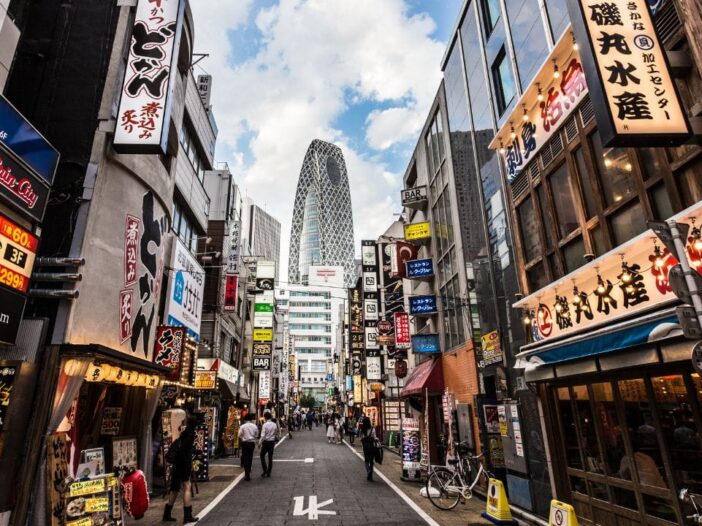
In view of the danger of earthquake in Tokyo, the Government of Japan has started preparations to build a second capital. For this, Sana Takaechi’s government has issued a notification. The Japanese government says that this decision has been taken keeping the future in mind. Tokyo was recognized as the capital of Japan in 1868.
According to Bloomberg, the Government of Japan has approved the proposal related to finding a second capital. However, this proposal has caused controversy in Japan. Japan’s opposition parties say that Japan Innovation Party will benefit from this.
What are the reasons behind building a new capital?
1. Bloomberg quoted the government as saying that Japan’s capital Tokyo is going to be the most affected by earthquakes in the next 30 years. Earthquakes of 7 intensity can occur here. Its chances are 70 percent. Fault lines are active beneath Tokyo. Four tectonic plates around it collide with each other. These include the Pacific Plate, Philippine Plate, Eurasian Plate and North American Plate.
2. According to the report, at present the headquarters of most of the listed companies of Japan are located in Tokyo. Apart from this, 30 percent of Japan’s population lives in Tokyo. Most of the employment is here also.
3. The Japanese government has been preparing for this for a long time. It was told about it for the first time in 2010. The Japanese government says that the new capital that will be built will serve as a backup. If any accident happens in Tokyo, the government will be operated from here.
Which cities are being discussed for the new capital?
The first effort of the Japanese government is to prepare Osaka as the new capital. Osaka is a historical city of Japan. This is very important from tourism point of view. Apart from this, Miyagi, Hokkaido and Fukuoka are leading in the race.
In the notification issued by the government, it has been said that only those cities will be developed as capital, which fulfill these four qualifications-
1. Adequate government infrastructure
2. Economic level
3. Population size
4. Administrative capacity

Leave a Reply