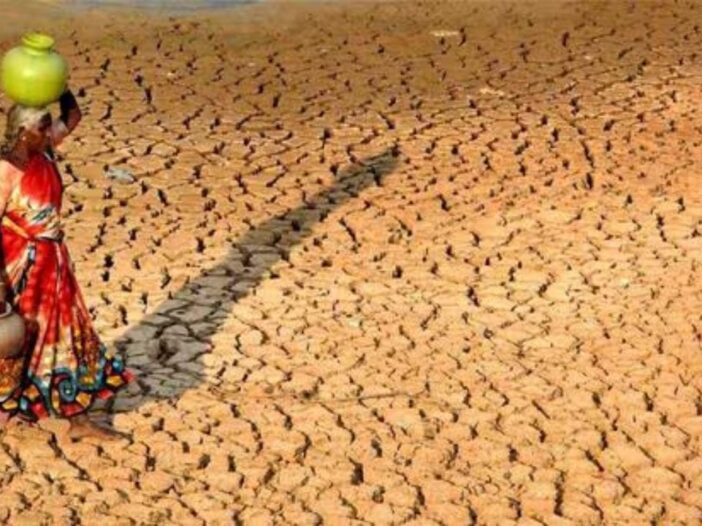
If there is one crisis that has silently engulfed the country, it is that of drinking water. No siren, no emergency, just one day the tap will open and no water will come. The figures presented by the government in the Parliament regarding the underground water in the country, give a clear indication that India is rapidly using its groundwater and the situation has become worrying in many areas.
According to government estimates, every year about 448 billion cubic meters of water gets filled under the ground in the country through rain and other sources. But out of this, only about 407 billion cubic meters of water that can be used safely is considered. In the year 2025, the country will extract 247 billion cubic meters of water from this groundwater. The country is using about 61 percent of its capacity groundwater every year.
This is an average figure, but the real picture emerges when the situation is seen area wise. One out of every ten areas is in crisis.
Danger sirens in these areas
This has come to light in the assessment of a total of 6762 areas (block, tehsil, division) of the country. In which there are 730 areas where more water is being extracted than what is being filled in the ground. Such areas have been placed in highly exploited areas.
Apart from this, 201 areas are in critical condition and 758 areas are at the warning limit. Whereas 4946 areas are currently declared safe. Apart from this, water in some areas has become salty, which is not fit for drinking or farming.
There is water, but not drinkable
According to the government, 73 percent of the areas of the country are in ‘safe’ category. But in many places in these areas the groundwater is poisoned with arsenic, which is fluoride-rich and can be dangerous for bones.
Nitrate is also mixed in it, which is fatal for children. It means clearly that water is in the ground, but it is not for humans. The figures presented by the government in Parliament show that one out of every 10 areas in the country is drawing more water from the ground.
There are 730 areas in the country where more water is being extracted from the ground than is being replenished. In these areas, borewells are becoming deeper every year, tanker water has become a necessity for cities, farming and drinking water are becoming enemies of each other.
Government claims versus ground situation
The government says that in the last few years, crores of water conservation structures have been built, thousands of ponds and check dams have been constructed. But the reality is that the water level has increased in only 54 percent of the wells in the country, in the remaining half of the country the groundwater is still going down.
What is the government doing?
To save and increase groundwater, the Central Government is working on many schemes, which include-
- Jal Shakti Abhiyan, under which ponds, check dams and rain water harvesting works are being done.
- Jal Sanchay Jan Bhagidari, in which people are being involved in saving water
- Atal Groundwater Scheme, which was run in water-scarce districts
- Amrit Sarovar Mission, under which thousands of ponds were built or revived

Leave a Reply