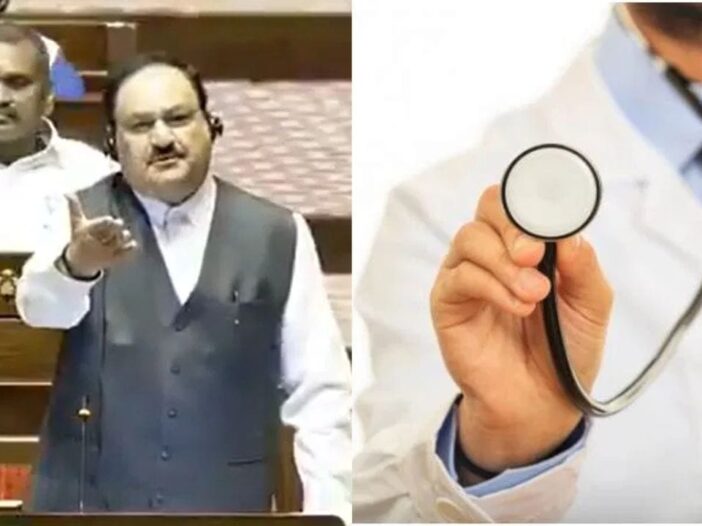
A data related to India’s health system created deep concern in the Parliament on Tuesday (December 2). The doctor-population ratio in the country is 1:811, that is, only one doctor is available for 811 people. The government shared this information during the Parliament session. Union Health Minister JP Nadda said that there are 13,88,185 registered allopathic doctors in India and 7,51,768 registered doctors in AYUSH system of medicine.
In a written reply to a question in the Rajya Sabha, Union Health Minister JP Nadda said that the doctor-population ratio in the country is 1:811. He said that there are 13,88,185 registered allopathic doctors in the country and 7,51,768 registered doctors in AYUSH system of medicine. He further said, ‘Assuming that 80 percent registered doctors are available in both allopathic and AYUSH systems, the doctor-population ratio in the country is estimated to be 1:811.’ He further said that the government has taken several steps to improve/increase the availability of doctors in deprived, rural and tribal areas.
Increase in the number of medical colleges
The Union Minister also told the House that there has been a significant increase in the number of medical colleges, undergraduate (UG) and postgraduate (PG) seats in the country. He said that in the last 11 years (since 2014), the number of medical colleges has increased from 378 to 818. With this increase, the number of undergraduate seats has increased from 51,348 to 1,28,875 and the number of postgraduate seats has increased from 31,185 to 82,059 since 2014.
137 out of 157 new medical colleges operational
The Minister informed that ‘Under the Centrally Sponsored Scheme for establishment of new medical colleges attached to existing district/referral hospitals, 137 new medical colleges out of the sanctioned 157 are functional, and Family Adoption Program (FAP) has been included in the MBBS curriculum to provide equitable healthcare to the rural population’. In FAP, medical colleges adopt villages and MBBS students adopt families from these villages.
Nadda said this enables regular follow-up of adoptive families for vaccination, growth monitoring, menstrual hygiene, iron-folic acid supplementation, healthy lifestyle, nutrition, vector control and medication adherence. He further said that this helps in educating/aware the families about the health programs launched by the Centre.
Special allowance for experts
The minister told the House that under the District Residency Program of the National Medical Commission (NMC), second and third year postgraduate students of medical colleges are posted in district hospitals. In addition, hard-area allowance is also given to specialist doctors for serving in rural and remote areas and for their residence.
Nadda said that under the National Health Mission, states are allowed to offer negotiable salaries to attract specialists, including flexibility in strategies like ‘you speak, we pay’.
Foreign doctors allowed to practice
Additionally, the Registration of Medical Practitioners and Medical Practice Licensing Regulations framed by the NMC relate to temporary registration of foreign medical practitioners, allowing foreign-qualified and foreign-registered doctors (non-Indian citizens) to practice in India for specific purposes, such as training, fellowship, research, supervision, specialist visits, voluntary service or approved postgraduate and super-specialty courses.

Leave a Reply