The paddy harvesting season 2025 is over. According to CAQM, according to the standard protocol made by ISRO, the time for official recording, monitoring and assessment of incidents of paddy stubble burning is also ending from 15 September to 30 November every year. This season has seen a decline in incidents of stubble burning in Punjab and Haryana, which reflects the consistent decline recorded in recent years under the Commission’s coordinated framework to prevent incidents of stubble burning in the region.
According to CAQM, over the past few years, there has been a steady decline in the incidence of field fires and the 2025 paddy harvesting season will record the lowest number of fire incidents. Punjab recorded 5,114 fire incidents this season, which shows a decrease of 53% compared to 2024, 86% compared to 2023, 90% compared to 2022 and 93% compared to 2021. Similarly, Haryana also maintained its performance, recording 662 incidents of farm fires this year, registering a decline of 53% compared to 2024, 71% compared to 2023, 81% compared to 2022 and 91% compared to 2021. These figures represent the biggest decline achieved since CAQM started monitoring state-specific crop residue management measures as per its action plan.
Special action plan in Punjab and Haryana
This decline in Punjab and Haryana has come due to implementation of state and district specific action plans, installation of crop residue management machinery on a large scale and better ex-situ use of paddy straw. This includes making energy from biomass, use in industrial boilers, making bio-ethanol, requiring the use of paddy straw pellets/briquettes for co-firing in TPPs and brick kilns, and packaging and many other commercial uses.
Continuous coordination between state agriculture departments, district administrations and the Commission ensured timely corrective action wherever major fire incidents were reported. Flying squads, stubble protection forces, ground level checking and enforcement by field officers and continuous monitoring by teams deployed in hotspot districts and special IEC campaigns and awareness programs for farmers also played an important role. Apart from this, a special CAQM cell has been created in Chandigarh, which has been entrusted with the task of focusing on year-round monitoring of paddy straw management and associated pollution activities.
Impact on air quality in Delhi-NCR
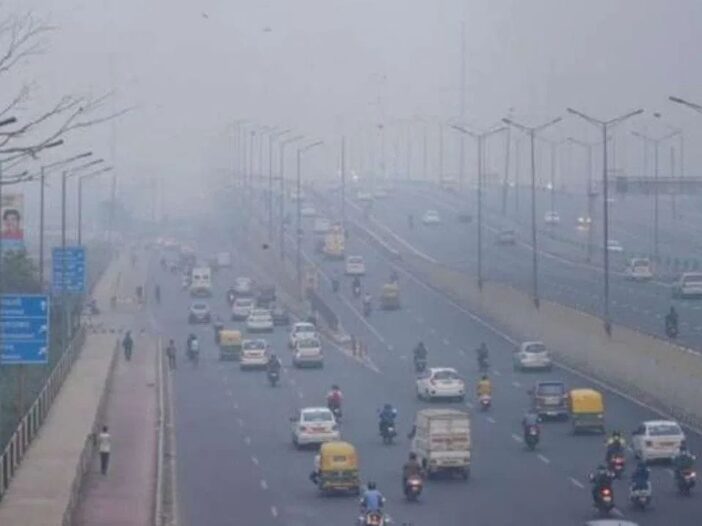
Although weather conditions also affect the air quality in Delhi-NCR, the incidence of field fires has reduced significantly this season, due to which the potential adverse situation caused by stubble burning has reduced to a great extent. With continued and strong enforcement and targeting to completely eliminate paddy stubble burning in the states of Punjab, Haryana and NCR, overall air quality in the region is expected to continue to improve in the coming years.
However, in the meantime, questions are also being raised that when politics is continuously going on in Delhi regarding pollution and stubble is repeatedly said to be a major reason for it, but on the other hand, according to the data of CAQM, there has been a decrease in the incidents of stubble burning in the neighboring states of Haryana and Punjab. So why is the climate of Delhi so polluted and suffocating?

Leave a Reply