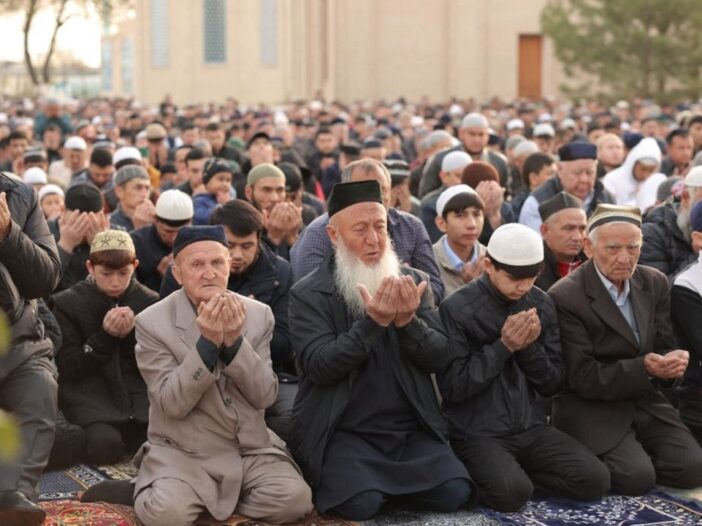
Uzbekistan, a Muslim-majority country in Central Asia, is currently facing the most severe drought in history. The situation has become so bad that on Friday, special prayers for rain were offered simultaneously in 2,000 mosques across the country. Religious leaders told people to ask for rain of mercy from Allah when science and weather do not cooperate.
Thousands of people gathered in the capital Tashkent and offered namaz in open fields and mosques. People say that we never prayed like this, but it has been raining for so long that we have had to ask for mercy from Allah.
Worst drought in 170 years
According to Uzbekistan’s weather agency, this year Tashkent has experienced the worst drought in 170 years. In the last 60 years, the country’s temperature has increased three times more than the global average. Due to this, the incidence of drought has increased rapidly. That means the problem this time is not just about weather, it is a direct effect of climate change.
Why did climate change worsen the situation?
According to the United Nations report, glaciers are melting rapidly due to rising temperatures. Which is the main source of water for about 8 crore population of Central Asia. In the five Central Asian countries, population and economy are increasing rapidly, while water sources are decreasing at the same pace. Because of this, water pressure on countries like Uzbekistan has increased manifold.
What things are being affected due to lack of rain?
Due to lack of rain, crops are drying up, lakes are shrinking, pressure on electricity and irrigation systems is increasing and the rural economy is faltering. In such a situation, people are turning to prayers as their last hope. From meteorology to international reports, it is clearly saying that this is not just a seasonal delay, but a serious and prolonged climate crisis. And unless environmental improvements are made on a large scale, the country may have to face such crises continuously.

Leave a Reply