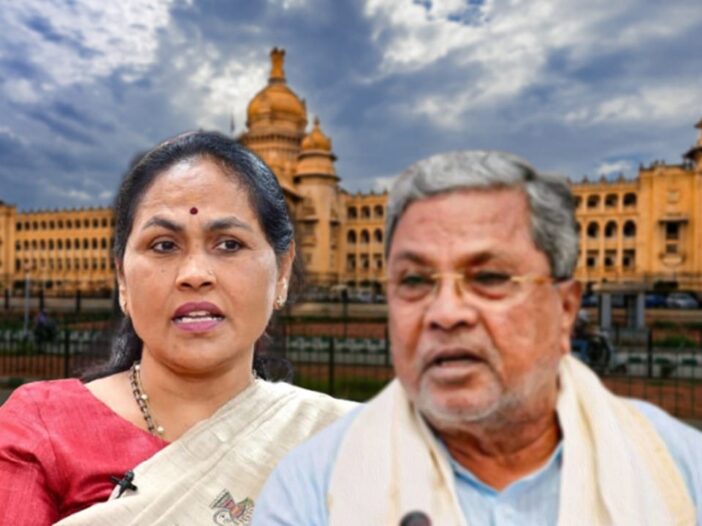
Even though there is a struggle going on for the top post within the ruling Congress in Karnataka, a situation of tension is also being created between the central and state governments regarding a bill of the Siddaramaiah government. The situation is that Union Minister Shobha Karandlaje requested the state Governor Thaawarchand Gehlot not to give his consent to the Karnataka Hate Speech and Hate Crimes (Prevention) Bill, 2025. He says that this bill is ‘vague and there is a possibility of its misuse’.
The Union Minister also requested to reserve the Bill for the consideration of President Draupadi Murmu under Article 200 of the Constitution, in view of the larger interest of constitutional governance, democratic freedoms and rule of law. The bill passed by both houses of the Karnataka Legislature will now be sent to the Governor for assent.
Conspiracy to silence the voice of opposition
On his social media platform ‘ Challenging the state government, he said, “We will not allow Congress to make the law a weapon to suppress freedom of expression and democratic dissent.”
In a letter sent to Governor Gehlot, Shobha Karandlaje said that the purpose of the bill is to address hate speech and hate crimes. However, upon careful scrutiny, it turns out that the Bill, in its present form, establishes a “state-controlled mechanism” to monitor, evaluate and punish speech rather than narrowly address expression that is blatant and threatening to public order.
‘Officials have more power’
He said, “The structure of the bill enables the competent authorities to determine the scope of expression, which further turns the law into a powerful tool to suppress voices critical of the government. Such a situation undermines the constitutional guarantee of democratic dissent and expression.”
Citing in her letter a reference to Article 19(1)(a) of the Constitution, which guarantees freedom of speech and expression to every citizen of the country, the Union Minister said, “This Bill deviates from these constitutional limits by employing broad, vague and subjective expressions like “dissent,” “malice” and “prejudicial interest” which are not properly defined. These terms give excessive powers to the executive.
‘Bill against backward classes, SC and women’
The minister also alleged in his complaint that the bill empowers executive authorities and law enforcement agencies to assess speech and take action without adequate judicial oversight. Punitive consequences are linked to executive evaluation, thereby focusing on investigative and judicial functions within the executive. He says that such a system weakens procedural safeguards.
Expressing concern, he said, “The vague and broad language of the law can be used to silence Kannada language activists, women’s organizations, Scheduled Caste and Scheduled Tribe people, minorities, journalists, backward classes, student groups and civil society organizations who raise issues related to governance, social justice or administrative accountability.”

Leave a Reply